

Reading the best books about the history of Spain is an invitation to understand how the identity of a diverse, complex, and fascinating country has been built. Each author, from their own perspective, reveals fundamental episodes of the past that still influence Spanish society, politics, and culture today. This guide brings together an essential selection of works for all types of readers: from those just starting out to those seeking deeper analysis. Here you’ll find not only a detailed description of each book, but also reader reviews, a comparison table, and links to purchase them or learn more.
► You may be interested in our Spanish literature category
Breve historia de España
García de Cortázar, one of Spain’s most influential historians, together with José Manuel González Vesga, manages to condense centuries of history into a clear and rigorous narrative. From pre-Roman Hispania to the current parliamentary democracy, this work covers the entire span of Spanish historical development with order and coherence.
Throughout the text, literary references, maps, timelines, and explanatory charts are included. It is one of the most widely used books about the history of Spain by teachers, students, and civil service exam candidates.
Reader reviews: It is common to read that “it is a reference manual” or that “it serves as a foundation for anyone who wants to study Spanish history seriously.” Many appreciate its balance between depth and clarity.

Historia de España contada para escépticos
Juan Eslava Galán, writer, historian, and Doctor of Letters, stands out for his ability to narrate historical events with humor and simplicity without losing accuracy. In this book, he takes readers on a journey from the earliest settlers to the present day, debunking myths and humanizing figures who are often idealized.
Each chapter is full of anecdotes, satire, and sharp commentary that make learning enjoyable. Eslava Galán breaks away from the usual rigidity of history textbooks and turns the past into an engaging and entertaining read.
Reader reviews: The public praises its didactic and approachable tone. Many say that “it’s perfect for those who want to understand history without feeling like they’re in a classroom” and highlight that “it sparks interest even in readers who previously avoided these topics”.

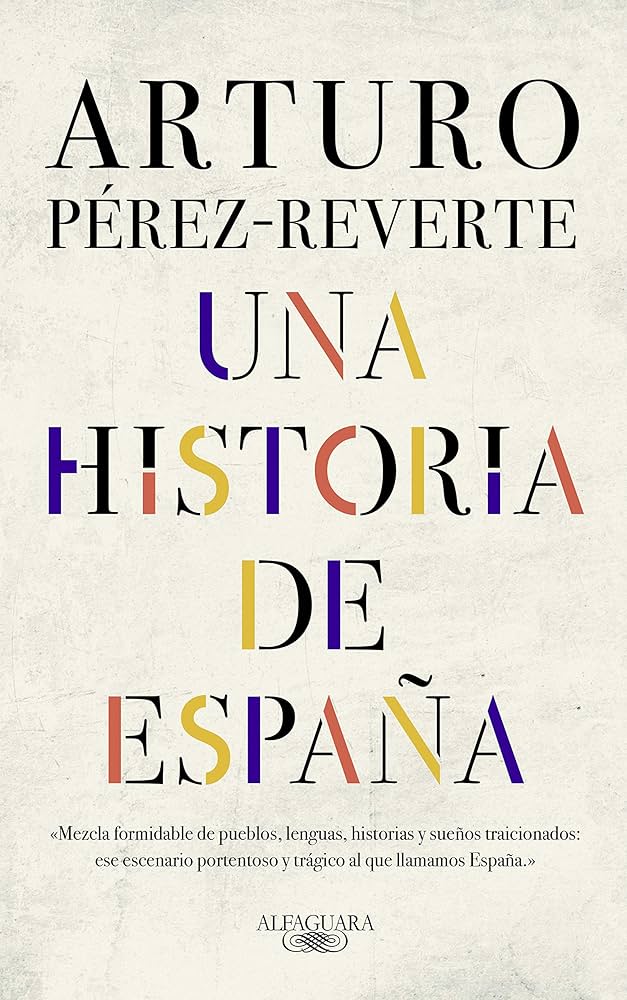
Una historia de España
In this work, Arturo Pérez-Reverte, renowned novelist and member of the Royal Spanish Academy, offers a very personal view of Spain’s historical journey. The book began as a series of Sunday columns and was later consolidated into an essay for readers seeking to understand “why we are the way we are.”
His narrative is provocative, with a tone that blends irony and criticism, covering everything from ancient Hispania to democratic Spain, with a special focus on repeated historical mistakes. It’s ideal for those who prefer an interpretive account rather than a strictly chronological one.
Reader reviews: Many readers appreciate his boldness in addressing controversial topics. They describe it as “a slap of historical reality” and value that “he doesn’t sugarcoat anything, but really makes you think.”
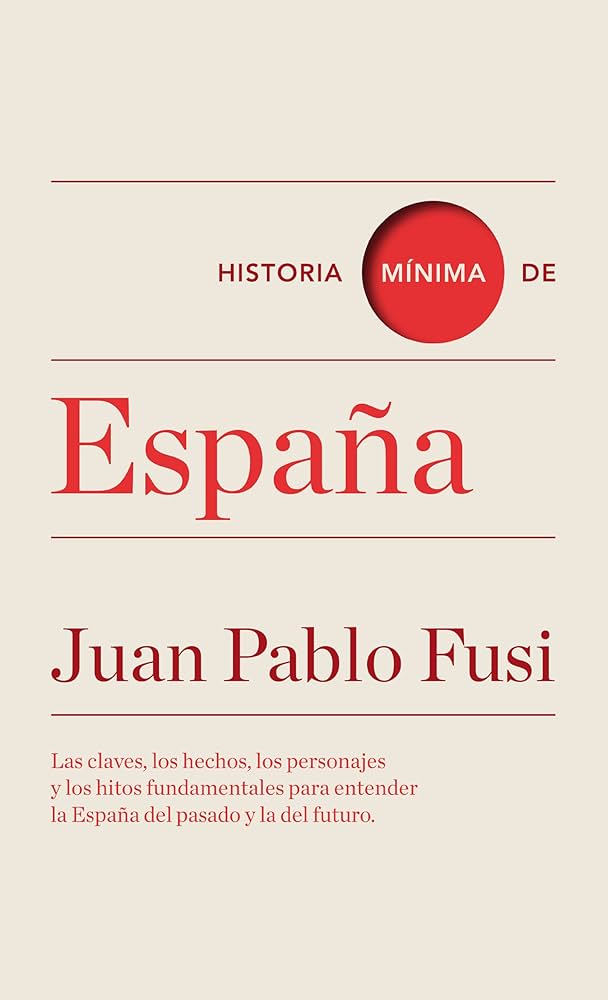
Historia mínima de España
Juan Pablo Fusi, professor and director of institutions such as the National Library, is known for his ability to synthesize without losing precision. In A Brief History of Spain, he covers the period from the Roman conquest to democratic Spain, focusing on the major processes that defined each era.
It is not a simple succession of dates, but a structured and critical interpretation of Spain’s evolution. It is ideal for those with limited time who still want a complete and up-to-date account.
Reader reviews: It is highly recommended for its clarity. Some describe it as “the best starting point for those who don’t know where to begin.” It is also appreciated for “going beyond the narrative by offering interpretation and context.”
El laberinto español
Gerald Brenan, a British Hispanist, wrote this work in the 1940s after living for several years in Andalusia. In it, he analyzes the deep-rooted causes of the Spanish Civil War from a cultural, political, and economic perspective, offering an external viewpoint that is both deeply respectful and thoroughly documented.
Although centered on the 19th and 20th centuries, it masterfully contextualizes the factors that made Spain a particularly troubled country. It is considered a classic of international political and historical thought on Spain.
Reader reviews:
Highly regarded by historians and discerning readers. It is said that “Brenan understands Spain better than many Spaniards” and that “it is essential for understanding the roots of the contemporary conflict.”

España. Una historia global
This book by Luis Francisco Martínez Montes, a career diplomat, offers a completely different perspective: that of a Spain viewed not only internally, but in relation to the world. It is an ideal work for moving beyond the usual historical localism and discovering how the country has influenced—and been influenced—on a global scale.
With references to the Spanish Empire, the evangelization of the Americas, science, art, and politics, this book shows that the history of Spain cannot be understood without considering its international role.
Reader reviews:
Highly recommended for its innovative approach. It is said that “it broadens the historical horizon” and that “it’s perfect for understanding Spain as a cultural power, not just a political or military one.”

Historia de España
Pierre Vilar, a French historian, applied a Marxist approach in this work to study the social, economic, and political structures that explain major historical changes. It is a more technical and academic book, but essential for understanding the systems of power that have shaped Spain.
His analysis stands out for connecting events with deeper causes, going beyond anecdotal storytelling. It is not a light read, but it is essential for anyone seeking a systemic understanding of the country.
Reader reviews:
It is praised for its rigor and depth. Many describe it as “key for advanced studies” and acknowledge that “it helps to understand not only what happened, but why it happened.”

España inteligible
In this essay, Julián Marías, philosopher and disciple of Ortega y Gasset, presents a reflective and identity-focused history. Rather than narrating events chronologically, he analyzes what it means to be Spanish over time, from a humanist and cultural perspective.
It includes concepts about the collective soul, culture, spirituality, and how these elements have shaped political and historical decisions. It is a more philosophical than narrative work, but a highly enriching one.
Reader reviews:
It is considered a transformative read. “It helps you think about history, not just read it,” many say. It is often cited in studies on Spanish thought.

Comparison of Books about the History of Spain
| Title | Author(s) | Main focus | Ideal for… | Length |
| Historia de España contada para escépticos | Juan Eslava Galán | Popular history with humor and criticism | General and curious readers | 500+ pages |
| Una historia de España | Arturo Pérez-Reverte | Personal, critical, and ironic essay | Reflective readers interested in identity | ~300 pages |
| Breve historia de España | García de Cortázar / González Vesga | Clear and comprehensive academic manual | Students, teachers, civil service exam candidates | 600+ pages |
| Historia mínima de España | Juan Pablo Fusi | Clear and modern synthesis | Readers with little time, first-time readers | ~270 pages |
| El laberinto español | Gerald Brenan | Analysis of the causes of the Civil War | Critical and analytical readers | ~400 pages |
| España. Una historia global | Luis F. Martínez Montes | ~400 pages | Interested in global relations | 700+ pages |
| Historia de España | Pierre Vilar | Structural and Marxist approach | Historians, researchers | 500+ pages |
| España inteligible | Julián Marías | Philosophical essay on identity | Intellectual and humanist readers | ~300 pages |
Books about the History of Spain as a Tool for Understanding
Getting to know the best books about the history of Spain offers a new perspective on the present. These texts not only inform but also shape judgment, raise questions, and foster critical thinking. Through them, the deep causes behind major events are revealed, the country’s contradictions are understood, and the cultural richness that has shaped its identity becomes clear. Whether for academic purposes, personal interest, or pure intellectual enjoyment, the history of Spain comes to life in these pages.