
Madrid has something special that isn’t always easy to explain. Maybe it’s the mix between its fast pace and its welcoming character, or that feeling that every neighbourhood hides a small cultural secret. Whatever it is, what’s clear is that the city has become, over time, one of the great refuges of European art. And I don’t say that only because of its most famous museums, but because of everything that happens around them, from visitors moved by a painting to the simple act of strolling along the Paseo del Prado on an ordinary morning.
When people talk about the best museums in Madrid, many immediately think of enormous names. However, what’s interesting is that the city doesn’t stop at those world-famous spaces. It also offers smaller, quieter museums that surprise you precisely because you don’t expect them to have so much personality. In that balance between the monumental and the intimate lies the true beauty of Madrid as an art capital.
This article brings together seven museums that I consider essential for different reasons. They’re not here only because of their fame or the number of works they hold, but because each one contributes something distinct. Some immerse you in centuries of history, others invite you to reflect on the contemporary world, and others give you more personal experiences, almost as if you were stepping into someone else’s home filled with memories.
The idea isn’t to offer a cold list or a summary you could find on any tourist website. I’d rather tell you about them in a closer way, as if we were talking about these places over coffee and I explained why each one is worth visiting. With their lights, their rhythms, their rooms that impress, and their moments of absolute calm.
Throughout the article you’ll see how Madrid brings together works that have shaped the history of Spain and the world. You’ll also discover that many Spanish artists find their finest expression within these walls, since their paintings are contextualised, they breathe, and they dialogue with other pieces in ways that can only be seen in a museum.
So this introduction simply serves as a starting point, an invitation to look at the city from another perspective. Now we can move on to the first major block, where the three fundamental pillars of Madrid’s art scene are found. Three museums that are not only among the best in Madrid, but among the best in the world.
Prado Museum
The Prado is one of the best museums in Madrid, one of those places that even people who have never been there already feel close to. It has that special aura that only museums where history has left deep traces can possess. As you enter, you immediately understand that you’re not simply here to look at paintings, but to travel through centuries of imagination, technique, and talent. The building is imposing, but with the elegance of something that doesn’t need to introduce itself. It only takes a few steps to notice that the atmosphere changes, that silence carries a different weight, and that visitors move almost with reverence.
What’s fascinating about the Prado is that, although we all know some of its most famous works, it always surprises with its ability to reveal something new. Maybe it’s because each room has its own light, or because the paintings seem different depending on the mood you arrive with. The museum isn’t static. It lives in a kind of constant dialogue between works, artists, and gazes. And that makes it an experience very different from any superficial visit.
Another aspect that makes it special is that it doesn’t try to cover everything, but rather to go deep into what best represents the essence of European art, especially Spanish art. That’s why El Greco, Velázquez, and Goya don’t appear as simple references, but as true protagonists. Their works are understood better here than in any textbook, because at the Prado everything fits: the lighting, the scale, the context, and the simple fact of standing before the original.
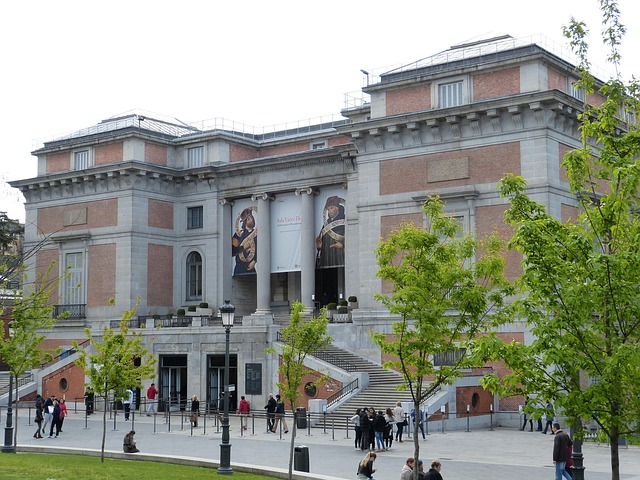
Essential works at the Prado Museum
Las Meninas is probably the painting that impresses visitors the most when they see it for the first time. Not only because of what it represents, but because of the feeling of being inside the scene. Velázquez plays with perspective and gazes as if he had painted it yesterday. Nearby, The Surrender of Breda confirms his narrative talent and turns a historical episode into an almost intimate moment.
Goya appears in a completely different register, since his work ranges from luminous portraits to dark visions that anticipate modern art. The Black Paintings, with Saturn Devouring His Son among them, are unsettling both for their power and their honesty. In a very different tone, The Nude Maja and The Clothed Maja reveal another side of the artist, more sensual, more direct, and far more daring for his time.
And although Velázquez and Goya take much of the spotlight, the museum holds other indispensable treasures, such as The Garden of Earthly Delights by Bosch, a work that seems centuries ahead of its time in visual fantasy, or The Annunciation by Fra Angelico, with an almost spiritual delicacy. Each one contributes something different, but all of them leave a memory that is difficult to forget.
▶ You may be interested in: 10 Great Spanish Painters
Reina Sofía Museum
If the Prado represents origins and tradition, the Reina Sofía is the museum where art frees itself from rules and experiments without fear. It is clearly one of the best museums in Madrid, and the experience feels different from the very beginning. The building breathes openness and light, the spaces unfold as if they want visitors to walk slowly and discover the works little by little. And that feeling continues on every floor.
The Reina Sofía does not simply aim to display modern pieces. It wants visitors to understand why they emerged, what movements transformed twentieth-century art, and how artists found new ways to express their inner world. In that sense, it is a museum that invites you to think, even to question. It is not unusual for many visitors to spend several minutes in front of a single work, trying to decipher what the artist wanted to communicate or what the piece awakens in them.
Here, the avant-garde becomes the protagonist. Picasso, Miró, Dalí, and so many others enter into dialogue in a journey that blends colour, form, and emotion. Each room offers a visual twist, a surprise, or a conceptual shift that ensures the visit never feels monotonous. And although many arrive for one specific painting, they often leave with the sense of having discovered something far broader than an iconic work.
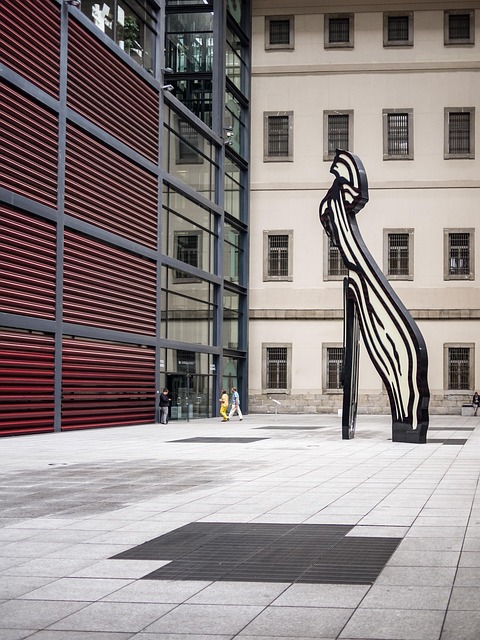
Essential works of the Reina Sofía Museum
The epicentre of the museum is undoubtedly Guernica. Seeing it in person completely changes your perception of it. Its scale, composition, and intensity make it one of the most important works of the twentieth century. But what is most interesting is the set of studies and sketches that accompany it, because they allow you to understand how Picasso built the work step by step until its final version.
Miró’s presence adds another entirely different dimension. His colours vibrate, his lines seem to move, and his symbols form a language of their own that, although sometimes enigmatic, feels surprisingly close. Dalí, for his part, takes the visitor into more introspective territory with works such as he Great MasturbatorT, a painting that blends imagination, desire, and a very particular sensitivity.
The complete journey through the museum allows you to understand not only modern art, but also the reasons that led so many artists to break with what was established. That is why the Reina Sofía is not just a museum you visit. It is a space you experience.
Thyssen-Bornemisza Museum
The Thyssen holds a very special place among the best museums in Madrid. It does not try to compete with the monumental grandeur of the Prado or the contemporary power of the Reina Sofía. Its value lies in its harmony, in its ability to offer a journey that connects centuries and styles without anything ever feeling out of place. In fact, it is one of the most rewarding museums to visit because it achieves that perfect balance between variety and clarity.
Its private collection, one of the most valuable in the world, allows for an exceptionally complete journey through the history of Western art. From medieval panels to Expressionist works, passing through Impressionists, Romantics, Realists, and twentieth-century American painters. It is a museum where every room shifts in tone, and yet everything fits together. And that is not easy to achieve.
The Thyssen has something else worth highlighting. Although it holds works of the highest level, it conveys a sense of calm that you do not always find in other major museums. Perhaps it is the layout, the light, or the quieter atmosphere, but it is an ideal place for those who enjoy art without rushing.
Essential works of the Thyssen-Bornemisza Museum
The museum brings together works by artists as varied as Ghirlandaio, Van Eyck, Monet, Degas, and Kandinsky, making it possible to understand how styles evolved over the centuries. Its Renaissance pieces bring delicacy and balance, while Flemish painting offers technical precision and an extraordinary level of detail.
The Impressionists contribute light and movement, especially in works by Renoir or Degas, and the collection of American art adds a very different dimension that cannot be found in the other great museums of Madrid.
Among Spanish artists, some works by Sorolla stand out for their unmistakable luminosity, as well as modern pieces by Miró and Dalí that dialogue perfectly with the museum’s more contemporary section.
▶ You may be interested in: 10 Masterpieces of the Thyssen
Sorolla Museum
The Sorolla Museum is one of the best museums in Madrid that changes your pace without you even noticing. You only need to step through the door for the city to fade away, as if someone suddenly lowered the volume. The painter’s house preserves that unhurried atmosphere that invites you to move slowly, to notice details, and to let the light guide the visit. The gardens, with that Mediterranean touch he loved so much, prepare anyone to enter a space where time feels different.
Inside, the sensation is very much like walking into a studio that is still alive. Paintings coexist with personal objects, quick sketches, brushes, family photographs, and pieces that show how Sorolla worked day by day. And perhaps that is why this museum has such a special charm: it does not simply display works, it opens a window into the artist’s private world.
Sorolla painted light as if he understood it from within. The way he captures the movement of water, the transparency of air, and the naturalness of figures is something that becomes even more striking in this setting. Some paintings shine differently here, probably because they are in the place where they were born. And you can feel it.
Essential works of the Sorolla Museum
Among the most beloved works is Walk along the Seashore, where the breeze seems to move through white dresses and the blue of the sea. His family portraits also stand out, full of tenderness and elegance, showing the painter’s most emotional side. Works such as Children on the Beach or his many Valencian scenes help explain why Sorolla remains one of the great masters of light in Spanish painting.
Lázaro Galdiano Museum
The Lázaro Galdiano Museum is, without exaggeration, a hidden gem in Madrid. Many people walk past it without realising what it holds inside, and perhaps that is why the experience is so pleasant. Here, the rooms are quiet, the atmosphere is intimate, and visitors can pause without feeling observed. It is one of those places where art is contemplated calmly, without crowds or haste.
The collection reflects the personal taste of José Lázaro Galdiano, a passionate collector who brought together pieces that are very different from one another. That variety is one of the museum’s greatest strengths. It does not follow a strict line, but it offers a journey full of surprises. Painting, sculpture, jewellery, ceremonial weapons, miniatures, manuscripts, and decorative objects create a panorama that is difficult to find elsewhere in the city.
The museum combines exceptional pieces by great masters with objects that speak of collecting in another era. And precisely that mixture creates a singular experience, very different from the more academic route of the Prado or the contemporary focus of the Reina Sofía.
Essential works of the Lázaro Galdiano Museum
One of the most striking paintings is The Witches’ Sabbath by Goya, a work filled with symbolism that, because of its unsettling atmosphere, tends to stay in visitors’ minds. Pieces attributed to El Greco also stand out, displaying his unmistakable spirituality, as well as paintings by Zurbarán and Murillo that bring that distinctive Baroque touch. All of this is complemented by historical objects and decorative arts that enrich the walk through this unusual museum.
National Archaeological Museum
The National Archaeological Museum is one of those places that surprises anyone expecting to find only ancient objects with little context. Here, the opposite is true. The museum explains clearly and visually how the different cultures that inhabited the Iberian Peninsula developed, from Prehistory to the Middle Ages. Therefore, rather than a simple succession of display cases, it offers a narrated journey that helps you understand how a large part of Spanish cultural identity was formed and evolved.
The museum’s renovation achieved something very valuable, as the rooms feel modern, bright, and educational without falling into oversimplification. Each piece has its place and its story, and visitors can follow a thread that connects eras and civilisations in a fluid way. Even those who think archaeology is not for them often leave with a different impression, because everything here is so well presented.
And although it is not a museum centred on painting, it does display exceptional works that form part of Spanish heritage in a broader sense. The value of the Archaeological Museum lies not only in aesthetics, but in what it explains. It is a museum that helps you understand the “before” in order to appreciate the “after.”
Essential works of the National Archaeological Museum
The Lady of Elche is the undisputed star of the museum, even for those with no particular affinity for archaeology. Its technical perfection, enigmatic expression, and presence make it an object that leaves an impact from the very first moment. The Lady of Baza offers another perspective on the Iberian world and helps reveal the cultural richness of that civilisation. Alongside these emblematic pieces, high-quality Roman mosaics and Visigothic objects stand out, showing the transition between different historical stages.
Royal Academy of Fine Arts of San Fernando
The Royal Academy of Fine Arts of San Fernando is one of those places that many people have heard of, but few have explored calmly. And when you finally enter, it feels like discovering a small hidden treasure right in the centre of Madrid. The building itself is imposing, with that solemn air that reminds you it was a decisive space in the artistic training of entire generations. In fact, names as important as Goya or Picasso passed through its classrooms, which already speaks volumes about its weight in the history of Spanish art.
The permanent collection surprises visitors with its variety and how well it is displayed. Although it is not an enormous museum, it offers a selection of painting, sculpture, engraving, and decorative arts that allows you to travel through different moments of artistic creation in Spain. The best part is that it is not a museum seeking spectacle, but quality. Here, works are viewed without rush, without crowds, and with that pleasant feeling of discovering something that others have not yet found.
In addition, the Academy preserves an exceptional graphic and sculptural collection, meaning the visit is not limited to painting and the route becomes more enriching. It is a museum that complements the great institutions of the Paseo del Arte very well because it offers another perspective, perhaps more academic, but equally valuable for understanding how artistic tradition was built in Spain.
Essential works of the Royal Academy of Fine Arts of San Fernando
Among the most outstanding pieces is the famous Self-Portrait by Goya, which has a special power when displayed in the very place where the painter studied and worked. Works by Zurbarán also stand out, alongside a strong collection of nineteenth-century landscapes and portraits, and several academic sculptures of enormous quality that show the technical precision demanded of artists trained here.
Another particularly significant work is Spring by Arcimboldo, a surprising piece for its imagination and technique. And to complete the experience, the Academy holds prints, drawings, and sketches that allow you to see how artists developed their ideas before turning them into finished works.
| Museum | Most notable feature | Highlighted work |
| Prado Museum | The great benchmark of classical art in Spain. | Las Meninas by Velázquez |
| Reina Sofía Museum | A centre of avant-garde and contemporary Spanish art. | Guernica by Picasso |
| Thyssen Museum | A balanced journey through seven centuries of art. | Impressionists and Expressionists |
| Sorolla Museum | The artist’s home, with an intimate and luminous atmosphere. | Strolling along the Seashore |
| Lázaro Galdiano Museum | A varied collection with unique pieces from private collecting. | Witches’ Sabbath by Goya |
| National Archaeological Museum | The history of the cultures that inhabited the peninsula. | Lady of Elche |
| Royal Academy of Fine Arts of San Fernando | A key historical institution in Spanish artistic education. | Self-Portrait by Goya |
Enjoying Madrid through a different lens
After exploring the best museums in Madrid, it is easy to understand why this city has become an international cultural reference. Each one offers something different, and together they form an artistic map that goes far beyond a simple list of places to visit. Here, the experience changes depending on the day, the light, or even the mood with which you approach it. And that is one of the reasons so many travellers return again and again.
The Prado places you face to face with the giants of European painting. The Reina Sofía takes you into a territory where rules stop mattering. The Thyssen guides you through a journey that connects styles as if it were the most natural thing in the world. Sorolla opens the door to his own home and invites you to see his work from an intimacy that is deeply moving. The Lázaro Galdiano surprises you with the personality of its collection. The Archaeological Museum offers a profound reading of the past, the kind that helps you understand where we come from. And the Royal Academy of Fine Arts of San Fernando adds an academic and silent perspective that is perfect for those seeking a more balanced experience.
In the end, what remains is not only the memory of the works, but the feeling of having walked through a city that understands art as part of its DNA. Madrid does not need to make an effort to prove it, because it carries it in its museums, its streets, its buildings, and in that uniquely Madrid way of blending history and modernity without losing its identity.
Therefore, if you decide to explore these places, do so at your own pace and without hurry. Each museum has something to offer, and the most beautiful part is that every visit will be different from the last. That is how Madrid slowly wins you over, almost without you noticing, until one day you look back and understand why so many people believe that here, art is lived, not only seen.