

Architecture in Spain has evolved over the centuries, influenced by the diverse cultures and artistic styles that defined each historical era. This article will take you through the different architectural styles found in Spain’s cities, exploring the most iconic examples and the technical and stylistic evolution that has shaped many of the country’s most iconic monuments and buildings.
What types of architectural styles are there in Spain?
Classical: 1st-5th centuries
The presence of the Romans in the Iberian Peninsula left an indelible architectural legacy, with a focus on monumentality and functionality. The Romans introduced the classical architectural orders —Doric, Ionian, and Corinthian— which were used in temples, theatres, and other public constructions.
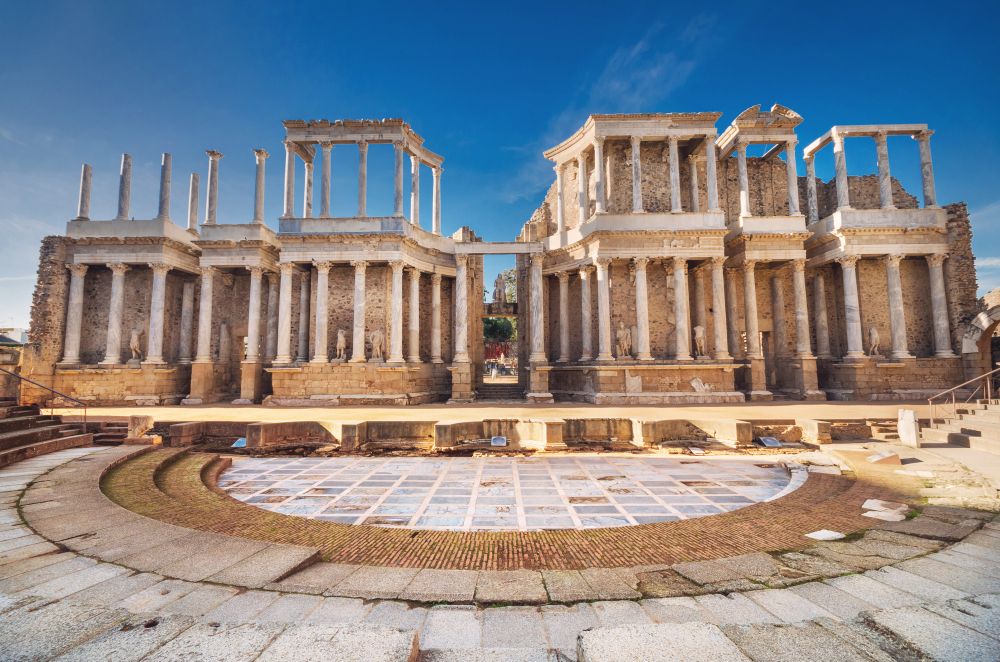
A clear example of this era is the Roman Theatre of Mérida, one of the best-preserved structures from ancient Rome. Another important landmark is the Aqueduct of Segovia, built without the use of mortar, showcasing the engineering skill of the Romans in constructing public works that still endure today.
These works were fundamental to the organization of public life, and many of these monuments are still in use or are important tourist attractions. Roman architecture was not limited solely to aesthetic beauty, but also to the creation of infrastructure such as roads and bridges, essential to the connectivity of the empire.
Visigoth: 5th-8th centuries
With the fall of the Roman Empire, the Visigoths adopted elements of classical architecture but developed their own style focused on Christian churches. The horseshoe arch, one of the most distinctive elements of this period, reflects the influence that the later Muslim era would have. The Visigoths also adapted simplified Corinthian capitals and used decorations with vegetal and animal motifs, influenced by Christianity.
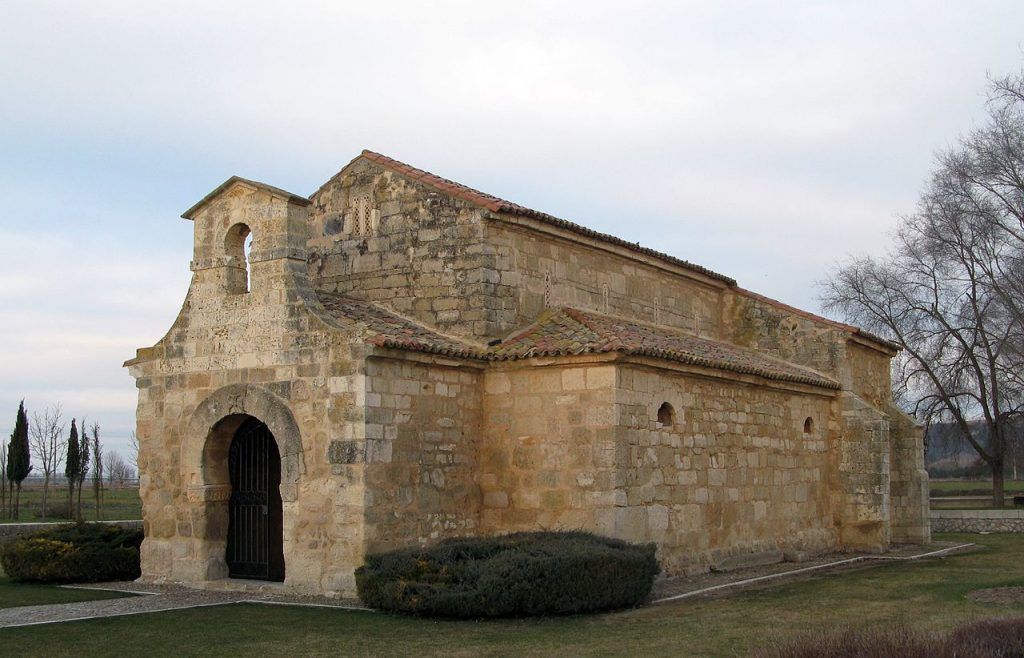
A representative example is the Church of San Juan de Baños in Palencia, which shows a synthesis of classical tradition with new decorative elements that would become fundamental to the evolution of medieval style in Spain.
Hispanic-Muslim: 8th-15th centuries
With the arrival of the Muslims in the 8th century, a new architectural style emerged: Hispano-Muslim architecture, which developed from a rich decorative and technical tradition. The Muslims introduced a number of innovations, such as more stylized horseshoe arches and intricate geometric decorations inspired by nature and the writings of the Quran. Muslim influence not only transformed the architecture of mosques and palaces, but also changed the way interior and exterior spaces were designed, with integrated courtyards and gardens.
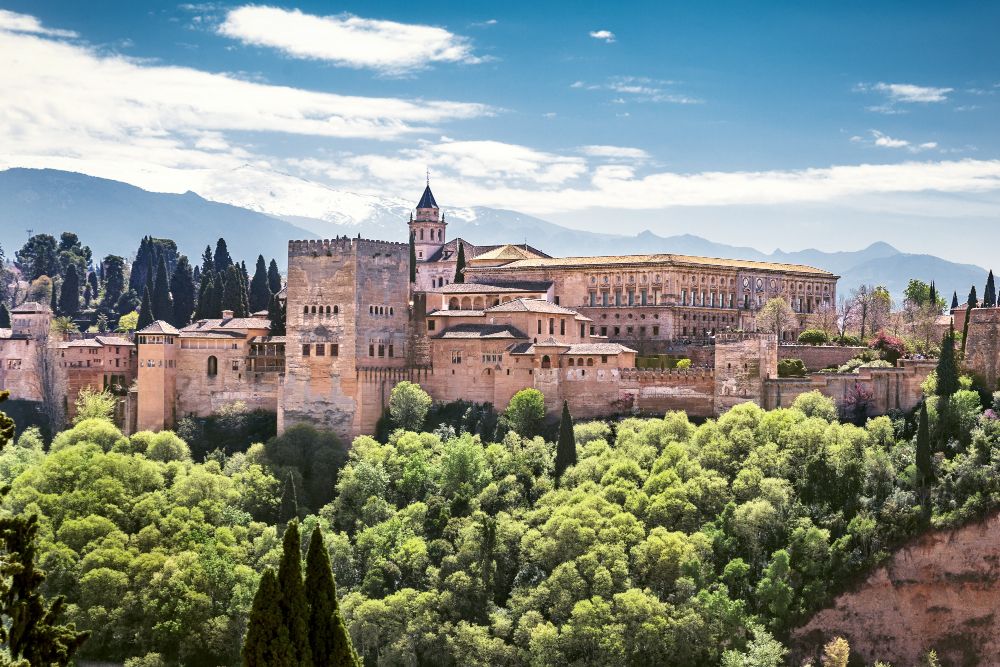
Nasrid art, which reached its peak in the Alhambra of Granada, is one of the most significant examples of this period. The Alhambra, with its elaborate courtyards, rooms adorned with muqarnas, and ornate arches, is a testament to the splendor of Islamic culture in Spain. Also prominent is the Great Mosque of Córdoba, with its forest of columns and red-and-white striped arches, a symbol of Islamic power on the peninsula.
Romanesque: 11th-13th centuries
The Romanesque style flourished mainly in the north of Spain, closely tied to the expansion of Christianity and the construction of churches and monasteries. This architectural style is known for its thick walls, small windows, and robust appearance, designed to invite meditation in a sober and austere atmosphere. Romanesque buildings also featured architectural elements such as barrel vaults and floor plans in the shape of a Latin cross.

A notable example is the Monastery of Santo Domingo de Silos in Burgos, whose cloister is one of the most beautiful examples of Romanesque architecture in Spain. This style also incorporated artistic elements such as sculpture and painting, and in many cases, Romanesque churches served as true museums of religious art.
Gothic: 13th-14th centuries
The Gothic style brought a major transformation in architecture, shifting from heavy, enclosed buildings to lighter, more luminous constructions. It was characterized by the use of pointed arches, stained-glass windows, and rose windows that allowed light to flood the large interior spaces of cathedrals. Windows increased in size, and structures reached impressive heights, creating an atmosphere that felt closer to the heavens.
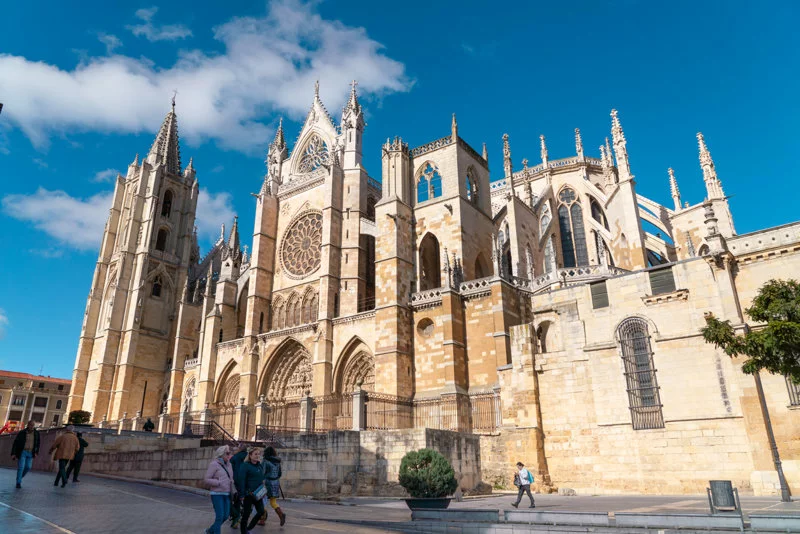
The Cathedral of León, known as the “Pulcra Leonina,” is one of the finest examples of Gothic architecture in Spain. Its stained-glass windows are particularly famous, offering a spectacular display of light and color inside. This style marked a shift in the urban landscape, as Gothic cathedrals became the most important and visible buildings in the cities.
Renaissance: 15th-16th centuries
The Renaissance, which brought with it the ideals of humanism and classicism, was reflected in Spanish architecture through a return to simple, geometric, and balanced forms. Inspired by the classical models of Greece and Rome, the Spanish Renaissance is characterized by strict symmetry and a focus on proportion.

One of the most outstanding examples is the Monastery of El Escorial, which combines Renaissance monumentality with an austere and symmetrical design. Also noteworthy is the Palace of the Infantado in Guadalajara, which merges late Gothic with Renaissance elements, creating a unique architecture that reflects the transition from one era to another.
Baroque: 17th-18th centuries
Baroque art in Spain is characterized by its opulence and drama, with altarpieces full of movement and façades designed to create a powerful visual impact. This style broke away from the serenity of the Renaissance and focused on creating spaces overloaded with detail, especially in churches.
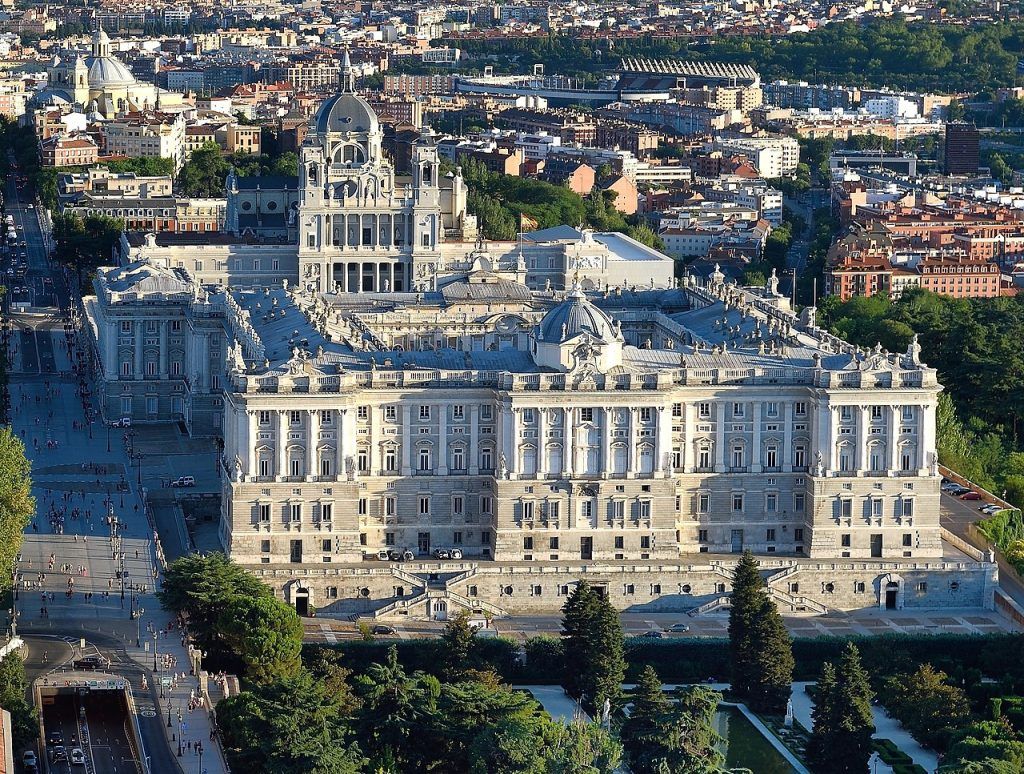
An impressive example is the Royal Palace of Madrid, initially designed by Filippo Juvarra and continued by architects such as Giovanni Battista Sacchetti and Francesco Sabatini. It is a clear exponent of late Baroque with classicist touches. This monumental construction, commissioned by Philip V, reflects the grandeur and power of the Spanish monarchy in the 18th century. We can also see examples of the Baroque in the altarpiece of Segovia Cathedral, a work by Churriguera, which showcases the magnificence of Spanish Baroque. In addition, the Church of San Luis de los Franceses in Seville is another clear reflection of the monumentality and drama of this style.
Neoclassicism: 18th Century
Neoclassicism brought back the ideals of classicism, seeking balance and serenity in contrast to the exuberance of the Baroque. Inspired by the ideals of the Enlightenment, this style is more sober and functional, although it remains monumental in its conception.

In Madrid, two key examples of architectural styles rooted in Neoclassicism are the Congress of Deputies and the Prado Museum, both featuring clear references to classical architecture and reflecting a return to simple, elegant forms.
Modernism: 19th-20th centuries
Modernism broke away from previous traditions to create a more organic and innovative architecture. Inspired by nature, this style uses plant-like forms and curved lines to bring buildings to life, making them resemble sculptures. In Spain, Modernism had its epicenter in Barcelona, with architect Antoni Gaudí as its greatest exponent.

The Sagrada Familia and Casa Batlló are examples of Gaudí’s mastery in using natural forms, vibrant colors, and innovative materials to create a unique architecture that has been recognized worldwide.
Contemporary Architecture: 20th-21st Centuries
Today, contemporary architecture in Spain focuses on sustainability and the use of new materials such as steel and glass. Skyscrapers and corporate headquarters are the most representative buildings of this era, with an emphasis on energy efficiency and futuristic design.
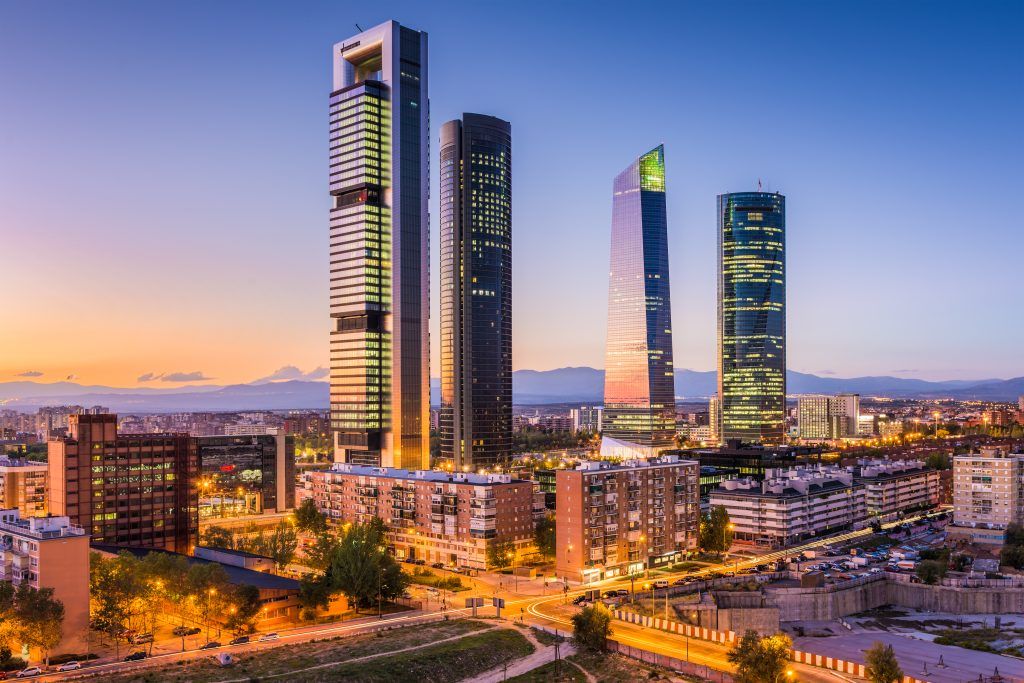
The Cuatro Torres in Madrid are an example of how architecture has evolved toward increasingly tall and modern structures, representing the globalization and modernity of contemporary Spain.
Ultimately…
Architecture in Spain is a reflection of its history, culture, and evolution. From monumental Roman structures to contemporary skyscrapers, each of the architectural styles has left its mark, contributing to a legacy that continues to be admired for its diversity and aesthetic richness.